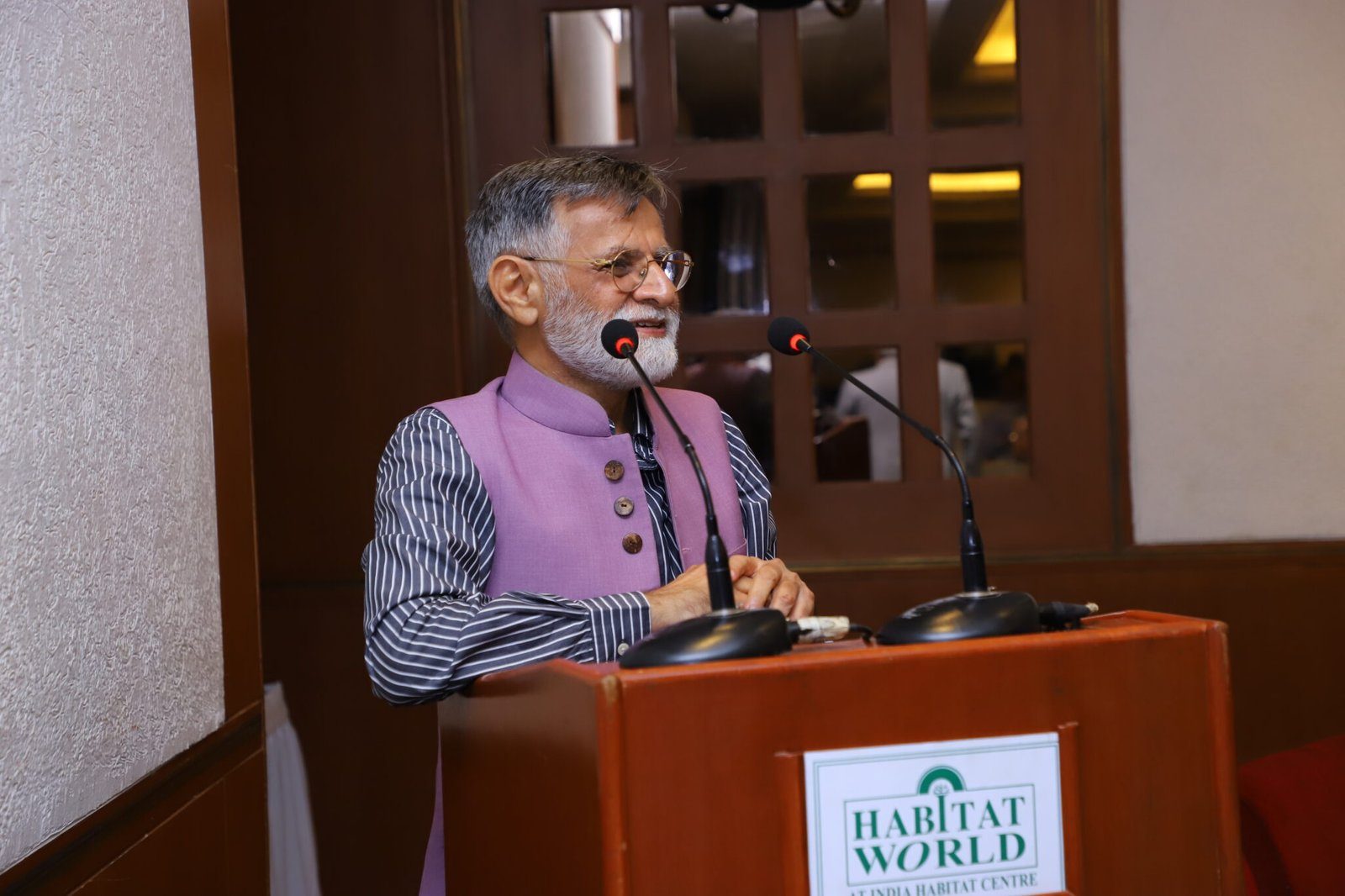
A life in service of justice
Lawyer, author, film-maker, mediator, teacher and human-rights activist — and a voice ordinary citizens have trusted for more than four decades.
Ashok Arora — whose name, he likes to say, means Always Happy, Always Smiling — studied at Hindu College and the Faculty of Law, University of Delhi. Even before he enrolled as a lawyer, as a fresh law graduate in 1979, he advised President Sanjeeva Reddy not to follow the opinion of the legal luminaries of the day on the dissolution of Parliament. Events proved him right.
In 1984, as a young lawyer, he went on an indefinite hunger strike. After eighty-four hours, the Delhi High Court was compelled to begin decentralising its courts so that justice could reach people’s doorsteps. He has consistently opposed lawyers’ strikes as anti-litigant — above all for poor prisoners left waiting in jail.
He has never been afraid to take on the powerful. When a trial court acquitted the accused in the Jessica Lal murder case, he told the then Chief Justice of India that the judge who had shaken the nation’s confidence should not be promoted. His stand helped spark nationwide protests; the Delhi High Court reversed the acquittal, and the Supreme Court upheld life sentences. He spoke out just as boldly after the acquittals in the Shivani Bhatnagar case.
As a writer he challenged the Constitution Bench of the Supreme Court for interpreting Article 105 to shield Members of Parliament from prosecution for taking bribes, and argued in the gas-connection scam that MPs whose quotas were misused were the main culprits.
His colleagues elected him Secretary of the Supreme Court Bar Association three times. In 2016, the then Chief Justice of India, Justice T.S. Thakur, told him in open court: “You should be in the Parliament.”
At the peak of his career he chose to step away from a lucrative legal practice to dedicate himself to guiding young people and to public causes. Former Law Minister Ram Jethmalani called him a “Gautam Buddha of the twenty-first century”; the media called him “a monk who sold his Ferrari — in the real sense.”
He has delivered hundreds of lectures to students, teachers, parents, judges, the army and the police on the Fundamental Duties of citizens, and produced and directed the film Kasoor Kiska, certified by the Central Board of Film Certification, which urges citizens to perform their duties under Article 51A and deals with counselling and support for survivors of rape. Over thirty-five years he has been interviewed hundreds of times by national and international media including the BBC, Star, Zee and Aaj Tak.
Today he divides his time between India and New York, studying how democracies can deliver real freedom and dignity to the billions still without it.
Education
B.A., Hindu College, University of Delhi
LL.B., Faculty of Law, University of Delhi
Philosophy — Harvard Summer School
The Nature and Origins of Morality; The Grammar of Style; Writing Your Novel — Oxford Summer School
Democracy and Its Discontents (PHI 118); Defending Democracy at Home and Abroad (POL 62); The Development of Purpose across the Lifespan — Stanford University
Research at Columbia Law School Library, New York
Research scholar: “Developing Citizenry for Real Freedom to Billions Suffering Undignified Life”, under the guidance of a Professor Emeritus, University of California